
Cart
Your cart is empty
Looks like you haven’t added anything yet, browse new arrivals below!
Continue ShoppingLooks like you haven’t added anything yet, browse new arrivals below!
Continue ShoppingSupportive footwear designed to help manage walking difficulties and improve stability during daily movement.
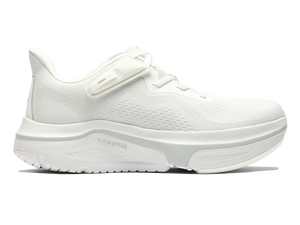

Difficulty walking can make even familiar spaces feel challenging. Whether you're managing balance issues, foot drop, muscle weakness, or coordination problems, walking difficulties affect how you move through daily life.
This collection focuses on supportive footwear designed to address common walking challenges. The goal is to provide shoes that work with your body's needs—offering stability, support, and confidence with every step.
Cadense shoes prioritize features that support easier walking: stable bases for better balance, supportive structures that reduce fatigue, secure fit systems that stay in place during movement, and easy entry designs that simplify getting shoes on and off.
One example is the Adaptive AFO Shoe, which offers a supportive walking platform and hands-free entry system designed for individuals experiencing mobility challenges.

For many people living with multiple sclerosis, walking difficulties are one of the most common and impactful symptoms. MS can affect walking in several ways:
• Muscle weakness that makes steps feel heavy or unstable
• Spasticity or stiffness that affects leg movement and stride
• Balance problems that increase fall risk or require extra concentration
• Foot drop that causes the front of the foot to drag or catch
• Sensory changes that make it harder to feel where your feet are
• Fatigue that makes walking feel exponentially harder as the day goes on
Supportive footwear becomes an important part of managing these symptoms. The right shoes can't eliminate MS-related walking difficulties, but they can provide a more stable foundation, reduce the mental effort required for each step, and help conserve energy throughout the day.
Our Shoes for Multiple Sclerosis collection includes additional styles specifically designed to address MS-related mobility challenges.

When walking feels harder than it should, footwear needs to work harder too. Shoes designed to support walking difficulties typically focus on several key elements:
• Wide, stable bases that reduce wobbling and improve balance
• Lightweight construction that doesn't add unnecessary weight to tired legs
• Supportive ankle structures that help control foot positioning
• Reliable traction that grips various surfaces without requiring extra effort
• Easy entry systems that accommodate reduced mobility or hand dexterity
• Rocker soles or supportive structures that assist with forward motion
These features work together to create footwear that supports more controlled, confident walking—even when your body isn't cooperating the way it used to.

Walking difficulties can stem from various neurological, muscular, or structural conditions. While this collection particularly addresses MS-related walking challenges, difficulty walking can also result from:
Stroke recovery, Parkinson's disease, peripheral neuropathy, spinal cord injuries, cerebral palsy, post-surgical recovery, arthritis affecting mobility, or general muscle weakness from aging or chronic conditions.
For individuals specifically managing foot drop—a common component of walking difficulty—our Shoes for Foot Drop collection focuses on footwear designed to support smoother toe clearance and forward motion.
If leg weakness is your primary challenge, our Shoes for Leg Weakness collection offers additional supportive options designed to compensate for reduced leg strength.

When walking becomes difficult, you may find yourself constantly thinking about each step—watching the ground, worrying about tripping, avoiding certain surfaces, or feeling exhausted after short distances.
Supportive footwear helps by:
• Providing a predictable, stable platform that reduces balance concerns
• Supporting proper alignment so your body doesn't have to work as hard to stay upright
• Offering consistent traction that works across tile, carpet, concrete, and other surfaces
• Reducing the mental load of walking so you can focus on where you're going instead of how you're getting there
Cadense designs aim to make walking feel more automatic again. The goal is footwear that supports independence, reduces fall risk, and makes daily movement feel less overwhelming.

The best shoes for walking difficulties provide stability, support, and ease of use. Look for footwear with wide bases for better balance, lightweight materials that don't add fatigue, and entry systems that don't require bending or complex hand movements.
Consider how the shoes work with any assistive devices you use, whether orthotics, AFO braces, or walking aids. Shoes should accommodate these supports comfortably without creating pressure points or instability.
When footwear supports your walking mechanics properly, you may notice improved confidence, reduced fatigue, better balance, and a greater willingness to stay active throughout the day.
MS can cause difficulty walking through muscle weakness, spasticity, balance problems, foot drop, sensory changes, and fatigue. These symptoms may occur individually or in combination, affecting how smoothly and confidently you can move.
While shoes cannot treat the underlying cause of walking difficulties, supportive footwear can significantly improve stability, reduce fall risk, and make walking feel more controlled and less exhausting. Proper shoes provide a stable foundation that compensates for balance or strength challenges.
The best shoes for difficulty walking offer wide, stable bases; lightweight construction; supportive ankle structures; reliable traction; and easy entry systems. Look for footwear specifically designed for mobility challenges rather than standard athletic or casual shoes.
If you're experiencing new or worsening walking difficulties, sudden balance problems, unexplained muscle weakness, or difficulty walking that interferes with daily activities, consult with a healthcare provider. These symptoms may indicate conditions that benefit from medical evaluation and treatment.
Look for stable bases that improve balance, lightweight materials that reduce fatigue, easy entry systems that accommodate reduced dexterity, good arch support, reliable traction for multiple surfaces, and enough room to accommodate orthotics or AFO braces if needed.
Yes. Adaptive shoes are specifically designed to address mobility challenges, including walking difficulties. They typically incorporate features like enhanced stability, supportive structures, easy entry systems, and accommodations for assistive devices—all of which can make walking safer and less fatiguing.
![[color: white] Original Women's Adaptive Shoe](http://cadense.com/cdn/shop/files/Carousel_1.1.jpg?crop=center&height=300&v=1782793357&width=300)
![[color: navy] Original Women's Adaptive Shoe](http://cadense.com/cdn/shop/files/Carousel_1.1_133c3c62-41e7-4326-a138-1a5bbc0dc0c7.jpg?crop=center&height=300&v=1785166685&width=300)
![[color: black] Original Women's Adaptive Shoe](http://cadense.com/cdn/shop/files/Carousel_1.1_560de3f6-0d75-4d2a-abc1-ea6f94f5ced8.jpg?crop=center&height=300&v=1782793714&width=300)
![[color: all black] Original Women's Adaptive Shoe](http://cadense.com/cdn/shop/files/Carousel_1.1_90d1cdee-d62a-4134-ab79-54689cd7b148.jpg?crop=center&height=300&v=1782794838&width=300)
![[color: light blue] Original Women's Adaptive Shoe](http://cadense.com/cdn/shop/files/Carousel_1.1_07b2cc14-6d54-48dc-943e-96a36dffa910.jpg?crop=center&height=300&v=1782794050&width=300)
![[color: seaglass] Original Women's Adaptive Shoe](http://cadense.com/cdn/shop/files/Carousel_1.1_44408226-d99e-4a7c-ab68-eb48dd4571f3.jpg?crop=center&height=300&v=1782794995&width=300)
![[color: silver] Original Women's Adaptive Shoe](http://cadense.com/cdn/shop/files/Carousel_1.1_121013cc-aac9-4c6e-80cc-eb0d4a0eaa66.jpg?crop=center&height=300&v=1782795162&width=300)


![[color: slate] Original Men's Adaptive Shoe](http://cadense.com/cdn/shop/files/Carousel_1.1_043cbf10-de36-46d8-b61b-4e0cdd585dac.jpg?crop=center&height=300&v=1782831815&width=300)
![[color: black] Original Men's Adaptive Shoe](http://cadense.com/cdn/shop/files/Carousel_1.1_8d540b1a-8d50-4d65-a154-073d92a92343.jpg?crop=center&height=300&v=1782831569&width=300)
![[color: all black] Original Men's Adaptive Shoe](http://cadense.com/cdn/shop/files/Carousel_1.1_a905a580-b581-4322-957a-e0447793f3c7.jpg?crop=center&height=300&v=1782832273&width=300)
![[color: navy] Original Men's Adaptive Shoe](http://cadense.com/cdn/shop/files/Carousel_1.1_ddc55524-2fd3-497b-849a-4ce171dcb50b.jpg?crop=center&height=300&v=1782832500&width=300)
![[color: silver] Original Men's Adaptive Shoe](http://cadense.com/cdn/shop/files/Carousel_1.1_cc198631-ca4f-4c4a-9e1d-34c7facf224a.jpg?crop=center&height=300&v=1782832715&width=300)
![[color: sand] Havena Women's Adaptive Slipper](http://cadense.com/cdn/shop/files/HAVENA_SAND_T1.jpg?crop=center&height=300&v=1758745193&width=300)
![[color: chestnut] Havena Women's Adaptive Slipper](http://cadense.com/cdn/shop/files/HAVENA_CHESTNUT_T1.jpg?crop=center&height=300&v=1758919965&width=300)
