Cart
Your cart is empty
Looks like you haven’t added anything yet, browse new arrivals below!
Continue ShoppingLooks like you haven’t added anything yet, browse new arrivals below!
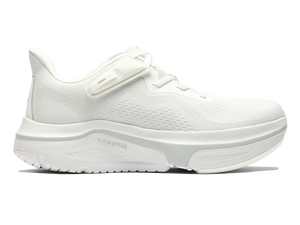
Continue ShoppingGentle, adaptive footwear engineered to support balance, stability, and natural gait—designed specifically for the challenges MS can bring.

Dr. Gretchen Hawley
Page content collaborator

“These shoes make my life a lot easier.”

“Thanks to Cadense I have been able to improve how I move my leg.”

“These have made such a difference to my walking.”

Walking can become more difficult with MS due to fatigue, numbness, muscle weakness, spasticity, or balance changes. The right footwear can make that daily movement safer, more stable, and more comfortable.
Cadense adaptive shoes are crafted to help manage common MS-related mobility challenges by offering:
Our community of MS ambassadors regularly shares that supportive footwear helps them stay active, walk more confidently, and experience fewer stumbles or slips.

Multiple sclerosis (MS) is a chronic autoimmune condition that affects the brain, spinal cord, and central nervous system. When the immune system attacks the protective myelin around nerves, signals between the brain and body may become slow or disrupted, impacting movement, balance, and sensation.
When choosing shoes for MS, consider:
Cadense footwear incorporates each of these features to help MS patients walk more comfortably and with greater confidence.
Explore our selection of adaptive shoes designed to support balance, reduce walking effort, and promote a more natural stride for individuals living with MS.




Yes. Even when symptoms are present, it can be challenging to diagnose MS correctly, which can lead to years of uncertainty for those in search of answers.
Some of the many conditions that can be misdiagnosed as MS include fibromyalgia, migraine, cerebral small vessel disease, functional neurological disorders, neuromyelitis optica spectrum disorders, infectious diseases, inflammatory conditions, and metabolic conditions.
How quickly MS progresses depends on the type you have. NHS says 8-9 out of 10 patients have relapsing remitting MS, featuring relapses and remissions. 2 out of 3 of those patients will eventually develop a progressive type called secondary progressive MS. It can take years, or even decades, for that transformation to occur.
Patients who do not initially develop relapsing remitting MS have primary progressive MS. This type immediately begins progressing after symptoms begin.
No particular diet has been proven effective for managing MS. Aim to eat a healthy, balanced diet with plenty of fruits, vegetables, whole grains, and healthy meat and fats. Do not eat too many sugars or processed foods.
Adaptive shoes can help MS patients to maintain their balance while moving over obstacles, reducing the chances of falls and injuries.
Spasticity in multiple sclerosis (MS) is a common symptom that can significantly affect a person's quality of life. It is characterized by muscle stiffness and involuntary muscle spasms.
The majority of people are diagnosed with MS between the ages of 20 and 40. This is the peak period when symptoms typically first appear. Early and accurate diagnosis is crucial for managing MS effectively. This often involves neurological exams, MRI scans, lumbar punctures, and blood tests to rule out other conditions.
Lightweight, supportive shoes with cushioning, stability, and adaptive fit features are ideal for individuals with MS. These help reduce fatigue, improve balance, and accommodate sensory or swelling changes.
Yes. Footwear that offers good traction, stable soles, and predictable ground contact can help improve balance for individuals experiencing proprioceptive changes due to MS.
Supportive shoes with structured soles, secure fit, and consistent surface grip can help reduce slips, trips, and loss of balance—common concerns among individuals with MS.
Supportive shoes may help some individuals with mild MS-related foot drop by providing stability and improving ground contact, although some may still benefit from an AFO or physical therapy.
Adaptive shoes are designed to address swelling, fatigue, gait changes, and balance issues common in MS. Traditional athletic shoes often lack the structured support and safety features needed for neurological mobility challenges.
Fatigue is one of the most common MS symptoms. Lightweight shoes reduce the physical effort required while walking, helping conserve energy throughout the day.
Yes. Shoes with a stable base, secure lacing, and controlled ground contact can help compensate for numbness or reduced sensory feedback in the feet.
Many individuals with MS who wear AFOs pair them with supportive adaptive footwear for added comfort, stability, and improved everyday mobility.
Shoes that reduce stumbling, increase traction, and support gait stability can improve confidence—especially for individuals who experience sudden weakness or sensory changes while walking.
Yes. Supportive shoes with stable soles and consistent traction can help reduce catching or slipping when transitioning between surfaces such as carpet, tile, thresholds, ramps, and outdoor terrain.
![[color: white] Original Women's Adaptive Shoe](http://cadense.com/cdn/shop/files/Carousel_1.1.jpg?crop=center&height=300&v=1782793357&width=300)
![[color: navy] Original Women's Adaptive Shoe](http://cadense.com/cdn/shop/files/Carousel_1.1_133c3c62-41e7-4326-a138-1a5bbc0dc0c7.jpg?crop=center&height=300&v=1785166685&width=300)
![[color: black] Original Women's Adaptive Shoe](http://cadense.com/cdn/shop/files/Carousel_1.1_560de3f6-0d75-4d2a-abc1-ea6f94f5ced8.jpg?crop=center&height=300&v=1782793714&width=300)
![[color: all black] Original Women's Adaptive Shoe](http://cadense.com/cdn/shop/files/Carousel_1.1_90d1cdee-d62a-4134-ab79-54689cd7b148.jpg?crop=center&height=300&v=1782794838&width=300)
![[color: light blue] Original Women's Adaptive Shoe](http://cadense.com/cdn/shop/files/Carousel_1.1_07b2cc14-6d54-48dc-943e-96a36dffa910.jpg?crop=center&height=300&v=1782794050&width=300)
![[color: seaglass] Original Women's Adaptive Shoe](http://cadense.com/cdn/shop/files/Carousel_1.1_44408226-d99e-4a7c-ab68-eb48dd4571f3.jpg?crop=center&height=300&v=1782794995&width=300)
![[color: silver] Original Women's Adaptive Shoe](http://cadense.com/cdn/shop/files/Carousel_1.1_121013cc-aac9-4c6e-80cc-eb0d4a0eaa66.jpg?crop=center&height=300&v=1782795162&width=300)


![[color: slate] Original Men's Adaptive Shoe](http://cadense.com/cdn/shop/files/Carousel_1.1_043cbf10-de36-46d8-b61b-4e0cdd585dac.jpg?crop=center&height=300&v=1782831815&width=300)
![[color: black] Original Men's Adaptive Shoe](http://cadense.com/cdn/shop/files/Carousel_1.1_8d540b1a-8d50-4d65-a154-073d92a92343.jpg?crop=center&height=300&v=1782831569&width=300)
![[color: all black] Original Men's Adaptive Shoe](http://cadense.com/cdn/shop/files/Carousel_1.1_a905a580-b581-4322-957a-e0447793f3c7.jpg?crop=center&height=300&v=1782832273&width=300)
![[color: navy] Original Men's Adaptive Shoe](http://cadense.com/cdn/shop/files/Carousel_1.1_ddc55524-2fd3-497b-849a-4ce171dcb50b.jpg?crop=center&height=300&v=1782832500&width=300)
![[color: silver] Original Men's Adaptive Shoe](http://cadense.com/cdn/shop/files/Carousel_1.1_cc198631-ca4f-4c4a-9e1d-34c7facf224a.jpg?crop=center&height=300&v=1782832715&width=300)
![[color: sand] Havena Women's Adaptive Slipper](http://cadense.com/cdn/shop/files/HAVENA_SAND_T1.jpg?crop=center&height=300&v=1758745193&width=300)
![[color: chestnut] Havena Women's Adaptive Slipper](http://cadense.com/cdn/shop/files/HAVENA_CHESTNUT_T1.jpg?crop=center&height=300&v=1758919965&width=300)