
Cart
Your cart is empty
Looks like you haven’t added anything yet, browse new arrivals below!
Continue ShoppingLooks like you haven’t added anything yet, browse new arrivals below!
Continue ShoppingUnderstanding festinating gait—a hurried, shuffling walking pattern—and how supportive footwear can provide stability.

Festinating gait, also called festination, is a walking pattern characterized by involuntarily quick, short, shuffling steps that accelerate forward. The term comes from the Latin word "festinare," meaning "to hurry." People with festinating gait often describe feeling like they're being pulled forward or chasing their center of gravity, unable to slow down or stop easily.
This distinctive gait pattern typically develops as a result of neurological conditions affecting movement control, most commonly Parkinson's disease. The walking pattern becomes progressively faster and more hurried, creating a sensation of loss of control that can be frightening and dangerous.
Common characteristics of festinating gait include:
• Rapid, short, shuffling steps that progressively accelerate
• Forward-leaning or stooped posture while walking
• Difficulty stopping or slowing down once movement begins
• Feet barely lifting off the ground (shuffling)
• Reduced arm swing during walking
• Sensation of being propelled forward involuntarily
• Difficulty initiating movement (freezing) followed by rushed steps
• High risk of falls, particularly forward falls
The hurried, out-of-control nature of festinating gait can make even short walks feel dangerous and exhausting.

Festinating gait is most strongly associated with Parkinson's disease, particularly in moderate to advanced stages. It develops as part of the broader movement difficulties characteristic of Parkinson's, which include:
• Bradykinesia (slowness of movement)
• Rigidity (muscle stiffness)
• Postural instability (balance problems)
• Freezing of gait (sudden inability to move feet)
In Parkinson's disease, festinating gait results from several interconnected factors:
Forward Posture and Center of Gravity Shift
The stooped, forward-leaning posture common in Parkinson's shifts the center of gravity forward. The body tries to take quick, short steps to "catch up" with this shifted weight and prevent falling. However, the steps can't fully compensate, leading to progressively faster, shorter steps.
Loss of Automatic Movement Control
Parkinson's disease damages the brain areas controlling automatic movements. Normal walking involves automatic adjustments to speed, stride length, and balance. When these systems fail, the person cannot easily slow down or stop once movement begins.
Muscle Rigidity
Stiff muscles make it difficult to take normal-length steps or adjust walking speed smoothly. The combination of rigidity and postural instability creates the characteristic rushed, shuffling pattern.
Festinating gait in Parkinson's often worsens when medication effectiveness decreases ("off" periods) and may improve somewhat during "on" periods when medication is working well.

While Parkinson's disease is the most common cause, festinating gait can also develop from other neurological conditions affecting movement control:
• Parkinsonism (Parkinson-like symptoms from other causes)
• Multiple system atrophy
• Progressive supranuclear palsy
• Vascular parkinsonism (from multiple small strokes)
• Certain medication side effects (drug-induced parkinsonism)
• Normal pressure hydrocephalus
If you're experiencing festinating gait, especially if it's a new symptom, consult with a healthcare provider for proper evaluation and diagnosis.

Living with festinating gait presents significant challenges that extend beyond the physical act of walking:
Safety and Fall Risk
• High risk of forward falls due to the accelerating, out-of-control movement
• Difficulty navigating doorways, turns, or obstacles
• Risk of running into walls, furniture, or other people
• Inability to stop quickly when needed
Psychological Impact
• Fear and anxiety about walking, especially in public
• Loss of confidence and independence
• Embarrassment about the visible, unusual walking pattern
• Social isolation due to fear of walking in public spaces
Physical Demands
• Rapid fatigue from the constant effort to control movement
• Muscle strain from abnormal gait mechanics
• Difficulty with activities requiring controlled walking (shopping, cooking, etc.)
Understanding these impacts helps explain why comprehensive management—including appropriate footwear—becomes important for individuals experiencing festinating gait.

Management of festinating gait typically involves multiple approaches:
Medical Treatment
• Parkinson's medications (levodopa and others) to improve movement control
• Medication timing adjustments to reduce "off" periods
• Deep brain stimulation in appropriate cases
Physical Therapy and Gait Training
• Exercises to improve posture and reduce forward lean
• Gait training focused on taking longer, more deliberate steps
• Visual and auditory cueing strategies (stepping over lines, matching rhythm)
• Balance and strengthening exercises
Compensatory Strategies
• Conscious focus on taking bigger, slower steps
• Counting steps or using mental cues to maintain control
• Using walking aids for stability and pacing
• Environmental modifications to reduce fall hazards
Treatment approaches are highly individualized and often require adjustments over time as the condition progresses.
For individuals also experiencing stooped posture alongside festinating gait, our Stooped Posture page offers additional information about managing forward-leaning posture.

While footwear cannot address the neurological causes of festinating gait or stop the accelerating pattern, Cadense shoes incorporate features that can provide support and stability when walking with this gait pattern:
• Wide, stable bases that provide a solid foundation even during rapid, shuffling steps
• Low heels that help maintain proper weight distribution and don't encourage forward lean
• Slip-resistant outsoles that provide confident traction during rapid, uncontrolled movement
• Smooth, rounded toe boxes that reduce the risk of catching or tripping during shuffling steps
• Lightweight construction that doesn't add to fatigue or slow down movement initiation
• Supportive structures that help maintain foot positioning during rapid steps
• Easy entry systems that accommodate the challenges of putting shoes on with Parkinson's-related movement difficulties
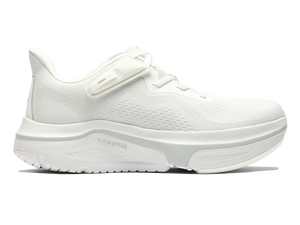
The Adaptive AFO Shoe, for example, offers hands-free entry, a stable walking platform, and supportive features that can help individuals managing Parkinson's-related gait abnormalities during daily movement.
Cadense designs aim to provide a stable, slip-resistant foundation for walking when dealing with the challenges of festinating gait. When combined with appropriate medical treatment, physical therapy, and gait training strategies, supportive footwear can be one component of managing mobility with this condition.
For individuals also experiencing shuffling gait patterns, our Shuffling Walk page offers additional information about supportive footwear for shuffling gait patterns.

When selecting footwear to support walking with festinating gait, prioritize features that enhance stability and reduce fall risk:
• Look for wide, stable bases that provide support during rapid, shuffling movement
• Choose low or flat heels to avoid encouraging forward weight shift
• Ensure slip-resistant outsoles for confident traction
• Select rounded toe boxes that resist catching during shuffling
• Consider easy entry systems that work with Parkinson's-related hand tremor or stiffness
• Prioritize lightweight shoes that don't impede movement initiation
Working with your physical therapist, occupational therapist, or healthcare provider can help identify which shoe features will best support your specific mobility needs and treatment plan.
Festinating gait is a walking pattern characterized by involuntarily quick, short, shuffling steps that progressively accelerate forward. People often describe feeling pulled forward or unable to slow down. It's most commonly associated with Parkinson's disease and results from the combination of forward-leaning posture, muscle rigidity, and loss of automatic movement control.
Festinating gait is most commonly caused by Parkinson's disease, but can also result from other conditions including parkinsonism, multiple system atrophy, progressive supranuclear palsy, vascular parkinsonism, medication side effects, or normal pressure hydrocephalus. It develops when neurological damage affects the brain's ability to control movement, posture, and balance.
While Parkinson's disease is the most common cause of festinating gait, it can occur in other neurological conditions that cause parkinsonism (Parkinson-like symptoms). Any condition affecting the brain areas controlling movement and posture can potentially lead to festination, though it's most strongly associated with Parkinson's.
Festinating gait can be managed through Parkinson's medications (particularly levodopa), physical therapy and gait training, visual and auditory cueing strategies, posture exercises, and compensatory techniques. While treatment may not eliminate festination entirely, it can often reduce severity and improve safety. Treatment effectiveness varies by individual and may require ongoing adjustments.
Shoes cannot address the neurological causes of festinating gait, but Cadense footwear can provide supportive features including wide, stable bases; slip-resistant traction; low heels; rounded toe boxes that resist catching; lightweight construction; and easy entry systems. These features can help with stability and safety when walking with this gait pattern.
Look for wide, stable bases; slip-resistant outsoles; low or flat heels; rounded toe boxes; lightweight construction; supportive structures; and easy entry systems. Avoid elevated heels or narrow bases that could worsen balance issues. Consult with your physical therapist or healthcare provider about specific footwear recommendations based on your mobility needs.
![[color: white] Original Women's Adaptive Shoe](http://cadense.com/cdn/shop/files/Carousel_1.1.jpg?crop=center&height=300&v=1782793357&width=300)
![[color: navy] Original Women's Adaptive Shoe](http://cadense.com/cdn/shop/files/Carousel_1.1_133c3c62-41e7-4326-a138-1a5bbc0dc0c7.jpg?crop=center&height=300&v=1785166685&width=300)
![[color: black] Original Women's Adaptive Shoe](http://cadense.com/cdn/shop/files/Carousel_1.1_560de3f6-0d75-4d2a-abc1-ea6f94f5ced8.jpg?crop=center&height=300&v=1782793714&width=300)
![[color: all black] Original Women's Adaptive Shoe](http://cadense.com/cdn/shop/files/Carousel_1.1_90d1cdee-d62a-4134-ab79-54689cd7b148.jpg?crop=center&height=300&v=1782794838&width=300)
![[color: light blue] Original Women's Adaptive Shoe](http://cadense.com/cdn/shop/files/Carousel_1.1_07b2cc14-6d54-48dc-943e-96a36dffa910.jpg?crop=center&height=300&v=1782794050&width=300)
![[color: seaglass] Original Women's Adaptive Shoe](http://cadense.com/cdn/shop/files/Carousel_1.1_44408226-d99e-4a7c-ab68-eb48dd4571f3.jpg?crop=center&height=300&v=1782794995&width=300)
![[color: silver] Original Women's Adaptive Shoe](http://cadense.com/cdn/shop/files/Carousel_1.1_121013cc-aac9-4c6e-80cc-eb0d4a0eaa66.jpg?crop=center&height=300&v=1782795162&width=300)


![[color: slate] Original Men's Adaptive Shoe](http://cadense.com/cdn/shop/files/Carousel_1.1_043cbf10-de36-46d8-b61b-4e0cdd585dac.jpg?crop=center&height=300&v=1782831815&width=300)
![[color: black] Original Men's Adaptive Shoe](http://cadense.com/cdn/shop/files/Carousel_1.1_8d540b1a-8d50-4d65-a154-073d92a92343.jpg?crop=center&height=300&v=1782831569&width=300)
![[color: all black] Original Men's Adaptive Shoe](http://cadense.com/cdn/shop/files/Carousel_1.1_a905a580-b581-4322-957a-e0447793f3c7.jpg?crop=center&height=300&v=1782832273&width=300)
![[color: navy] Original Men's Adaptive Shoe](http://cadense.com/cdn/shop/files/Carousel_1.1_ddc55524-2fd3-497b-849a-4ce171dcb50b.jpg?crop=center&height=300&v=1782832500&width=300)
![[color: silver] Original Men's Adaptive Shoe](http://cadense.com/cdn/shop/files/Carousel_1.1_cc198631-ca4f-4c4a-9e1d-34c7facf224a.jpg?crop=center&height=300&v=1782832715&width=300)
![[color: sand] Havena Women's Adaptive Slipper](http://cadense.com/cdn/shop/files/HAVENA_SAND_T1.jpg?crop=center&height=300&v=1758745193&width=300)
![[color: chestnut] Havena Women's Adaptive Slipper](http://cadense.com/cdn/shop/files/HAVENA_CHESTNUT_T1.jpg?crop=center&height=300&v=1758919965&width=300)
