
Cart
Your cart is empty
Looks like you haven’t added anything yet, browse new arrivals below!
Continue ShoppingLooks like you haven’t added anything yet, browse new arrivals below!
Continue ShoppingSupportive footwear designed to help address shuffling gait with rocker soles and features that encourage smoother walking.
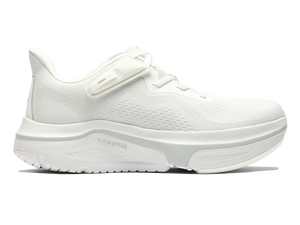

A shuffling walk—where your feet barely leave the ground and you drag or scuff your shoes with each step—can make even short distances feel exhausting and increase your risk of tripping. When your gait becomes shuffled, you may notice worn-out shoe soles, difficulty navigating curbs or uneven surfaces, and constant worry about catching your feet.
This collection focuses on supportive footwear designed to help address shuffling gait. While shoes cannot cure the underlying causes of shuffling, Cadense shoes help to encourage better stride mechanics, reduce trip risk, and support more controlled walking through features specifically designed for gait challenges.
Cadense designs prioritize features that support improved walking patterns: rocker soles that facilitate forward rolling motion, lightweight construction that makes lifting feet easier, supportive structures that encourage proper foot positioning, and slip-resistant outsoles that provide confidence during movement.
One example is the Adaptive AFO Shoe, which offers a rocker sole design and supportive platform created to help individuals experiencing gait abnormalities walk more smoothly.

Shuffling gait is a walking pattern characterized by short steps where the feet barely clear the ground. Instead of the normal heel-to-toe rolling motion, the feet remain closer to the floor throughout the walking cycle, creating a dragging or scuffing sound and appearance.
Common characteristics of shuffling walk include:
• Feet sliding or dragging along the ground rather than lifting
• Shortened stride length with smaller, more frequent steps
• Reduced arm swing during walking
• Forward-leaning posture or stooped position
• Difficulty initiating movement or turning
• Increased fall risk from tripping over small obstacles
This walking pattern often develops gradually, and you may not notice the change until others point it out or you realize you're tripping more frequently or wearing out your shoes unusually fast.

Shuffling gait can develop from various neurological, muscular, or age-related conditions. Understanding the cause is important for proper treatment:
Neurological Conditions
• Parkinson's disease (one of the most common causes of shuffling gait)
• Multiple sclerosis affecting coordination and muscle control
• Stroke affecting motor control and balance
• Normal pressure hydrocephalus
• Peripheral neuropathy reducing sensation in feet
Muscle and Joint Issues
• Muscle weakness or atrophy in legs
• Arthritis causing pain and limited range of motion
• Hip or knee problems affecting gait mechanics
Age-Related Changes
• General muscle loss (sarcopenia) reducing strength
• Balance system deterioration affecting coordination
• Decreased flexibility and range of motion
• Fear of falling leading to cautious, shuffling gait
If you've developed a shuffling walk, especially if it's a recent change, consult with a healthcare provider to identify the underlying cause and explore treatment options.
For individuals managing walking difficulties related to neurological conditions, our Shoes for Difficulty Walking collection offers additional supportive options designed for various mobility challenges.

Shuffling gait becomes increasingly common with age, though it's important to understand that it's not a normal or inevitable part of aging. When older adults develop a shuffling walk, it typically results from a combination of factors:
• Reduced leg strength making it harder to lift feet fully
• Balance concerns leading to a cautious, protective gait pattern
• Fear of falling causing deliberate shuffling to maintain stability
• Multiple medications affecting balance and coordination
• Chronic pain in feet, knees, or hips altering walking mechanics
• Vision changes making it harder to navigate safely
While shuffling may initially develop as a protective response to feeling unsteady, it paradoxically increases fall risk by making it easier to catch your feet on carpets, thresholds, or uneven surfaces. The shortened stride also makes it harder to recover balance if you do start to fall.
Addressing shuffling gait in seniors often requires a multi-faceted approach including strength and balance exercises, medical evaluation, appropriate footwear, and sometimes assistive devices.

While supportive footwear cannot address the underlying neurological or muscular causes of shuffling, Cadense shoes help to encourage better walking mechanics and reduce trip risk through specific design features:
• Rocker soles that facilitate forward rolling motion and reduce the need for ankle dorsiflexion
• Lightweight construction that makes lifting feet feel easier and less effortful
• Smooth, rounded toe boxes that reduce the chance of catching on carpets or thresholds
• Stable, wide bases that provide confidence and reduce the protective shuffling reflex
• Slip-resistant outsoles that grip surfaces without requiring excessive weight shift
• Supportive structures that help maintain proper foot positioning
• Easy entry systems that don't require balancing on one foot during dressing
These features work together to support smoother gait patterns. When combined with appropriate medical care, physical therapy, and strength exercises, supportive footwear becomes part of a comprehensive approach to improving walking mechanics.

When selecting footwear to help address shuffling gait, Cadense shoes prioritize features that encourage better stride mechanics and reduce trip risk. Look for shoes with rocker soles that facilitate forward motion, lightweight materials that don't add burden to leg muscles, and rounded toe boxes that resist catching.
Avoid shoes that are too heavy or have exaggerated toe springs that can actually make shuffling worse by changing your natural walking pattern. The goal is footwear that encourages normal gait mechanics while providing stability and confidence.
Pay attention to the outsole. Shoes with deep treads or aggressive patterns may catch on carpets, while completely smooth soles won't provide adequate traction. Look for balanced traction that grips when needed without creating resistance during the swing phase of walking.
Remember that footwear is one component of addressing shuffling gait. Cadense shoes help to support better walking mechanics, but they work best alongside physical therapy, strength training, balance exercises, and medical management of any underlying conditions.
Shuffling gait can be caused by neurological conditions (Parkinson's disease, MS, stroke), muscle weakness, arthritis, peripheral neuropathy, age-related balance decline, or fear of falling. It's characterized by short steps where feet drag along the ground rather than lifting properly. If you've developed a shuffling walk, consult a healthcare provider to identify the underlying cause.
While shuffling gait becomes more common with age, it is not a normal or inevitable part of aging. It typically indicates underlying issues such as muscle weakness, balance problems, neurological conditions, or fear of falling. Shuffling should be evaluated medically rather than accepted as normal aging.
Cadense shoes help to address shuffling gait through rocker soles that facilitate smoother forward motion, lightweight construction that makes lifting feet easier, and rounded toe boxes that reduce catching. While footwear cannot cure underlying causes, appropriate shoes support better walking mechanics when combined with medical care and physical therapy.
You may shuffle your feet due to muscle weakness making it hard to lift your feet fully, balance concerns causing a protective gait pattern, neurological conditions affecting movement control, pain altering your walking mechanics, or fear of falling leading to cautious shuffling. A healthcare evaluation can identify the specific cause.
Shuffling gait increases fall risk by making it easy to catch your feet on carpets, thresholds, or uneven surfaces. The shortened stride also makes it harder to recover balance if you start to fall. Additionally, shuffling can lead to reduced activity, further muscle weakening, and decreased confidence in walking.
Look for rocker soles that facilitate forward motion, lightweight construction, rounded or smooth toe boxes that resist catching, stable wide bases, balanced traction that grips without creating resistance, supportive structures, and easy entry systems. Cadense incorporates these features to help support better walking mechanics.
![[color: white] Original Women's Adaptive Shoe](http://cadense.com/cdn/shop/files/Carousel_1.1.jpg?crop=center&height=300&v=1782793357&width=300)
![[color: navy] Original Women's Adaptive Shoe](http://cadense.com/cdn/shop/files/Carousel_1.1_133c3c62-41e7-4326-a138-1a5bbc0dc0c7.jpg?crop=center&height=300&v=1785166685&width=300)
![[color: black] Original Women's Adaptive Shoe](http://cadense.com/cdn/shop/files/Carousel_1.1_560de3f6-0d75-4d2a-abc1-ea6f94f5ced8.jpg?crop=center&height=300&v=1782793714&width=300)
![[color: all black] Original Women's Adaptive Shoe](http://cadense.com/cdn/shop/files/Carousel_1.1_90d1cdee-d62a-4134-ab79-54689cd7b148.jpg?crop=center&height=300&v=1782794838&width=300)
![[color: light blue] Original Women's Adaptive Shoe](http://cadense.com/cdn/shop/files/Carousel_1.1_07b2cc14-6d54-48dc-943e-96a36dffa910.jpg?crop=center&height=300&v=1782794050&width=300)
![[color: seaglass] Original Women's Adaptive Shoe](http://cadense.com/cdn/shop/files/Carousel_1.1_44408226-d99e-4a7c-ab68-eb48dd4571f3.jpg?crop=center&height=300&v=1782794995&width=300)
![[color: silver] Original Women's Adaptive Shoe](http://cadense.com/cdn/shop/files/Carousel_1.1_121013cc-aac9-4c6e-80cc-eb0d4a0eaa66.jpg?crop=center&height=300&v=1782795162&width=300)


![[color: slate] Original Men's Adaptive Shoe](http://cadense.com/cdn/shop/files/Carousel_1.1_043cbf10-de36-46d8-b61b-4e0cdd585dac.jpg?crop=center&height=300&v=1782831815&width=300)
![[color: black] Original Men's Adaptive Shoe](http://cadense.com/cdn/shop/files/Carousel_1.1_8d540b1a-8d50-4d65-a154-073d92a92343.jpg?crop=center&height=300&v=1782831569&width=300)
![[color: all black] Original Men's Adaptive Shoe](http://cadense.com/cdn/shop/files/Carousel_1.1_a905a580-b581-4322-957a-e0447793f3c7.jpg?crop=center&height=300&v=1782832273&width=300)
![[color: navy] Original Men's Adaptive Shoe](http://cadense.com/cdn/shop/files/Carousel_1.1_ddc55524-2fd3-497b-849a-4ce171dcb50b.jpg?crop=center&height=300&v=1782832500&width=300)
![[color: silver] Original Men's Adaptive Shoe](http://cadense.com/cdn/shop/files/Carousel_1.1_cc198631-ca4f-4c4a-9e1d-34c7facf224a.jpg?crop=center&height=300&v=1782832715&width=300)
![[color: sand] Havena Women's Adaptive Slipper](http://cadense.com/cdn/shop/files/HAVENA_SAND_T1.jpg?crop=center&height=300&v=1758745193&width=300)
![[color: chestnut] Havena Women's Adaptive Slipper](http://cadense.com/cdn/shop/files/HAVENA_CHESTNUT_T1.jpg?crop=center&height=300&v=1758919965&width=300)
