Drop foot can make lifting the front part of the foot difficult, affecting walking, balance, and mobility. People with drop foot often experience fatigue, toe dragging, and difficulty navigating uneven surfaces, which can lead to trips, slips, and falls.
While therapy, braces, and supportive footwear are essential, exercises specifically targeting foot and ankle strength can complement these tools. Strengthening key muscles can improve mobility, confidence, and overall stability during daily activities.
Drop foot primarily affects the muscles that lift the foot, but other muscles also play a role in walking safely:
- Tibialis anterior – lifts the front of the foot.
- Peroneal muscles – support foot stability and prevent rolling.
- Calf muscles – control balance and push-off during walking.
- Foot intrinsic muscles – maintain arch support and balance.
Strengthening these muscles helps reduce toe dragging, maintain stride, and improve balance, which supports safer walking.
Below are exercises recommended by physical therapists for people experiencing drop foot. Always consult a professional before starting a new routine, especially if you have an underlying condition.
- Sit or stand with your feet flat on the floor.
- Slowly lift the front of your foot, keeping your heel on the ground.
- Hold for 2–3 seconds, then lower.
- Repeat 10–15 times per foot.
Benefit: Strengthens the tibialis anterior to improve foot lift and reduce dragging.
- Sit with your legs extended or lie down.
- Rotate your ankle in slow, controlled circles clockwise, then counterclockwise.
- Perform 10–15 rotations in each direction per foot.
Benefit: Increases ankle flexibility and strengthens supporting muscles, improving balance.
- Stand near a wall or chair for support.
- Lift your heels off the ground, balancing on the balls of your feet.
- Hold for 2–3 seconds, then lower.
- Repeat 10–15 times.
Benefit: Strengthens calf muscles to improve push-off and walking stability.
- Sit on the floor with legs extended.
- Loop a resistance band around the front of your foot, holding the ends in your hands.
- Pull your toes toward you against the band’s resistance, then slowly release.
- Repeat 10–15 times per foot.
Benefit: Builds strength in muscles that lift the foot, supporting safer walking and reducing trips.
- Sit with your foot flat on a towel on the floor.
- Use your toes to scrunch the towel toward you.
- Repeat 10–15 times per foot.
Benefit: Strengthens small foot muscles for better balance and stability.
While exercises strengthen muscles and improve mobility, supportive shoes provide stability and comfort, reducing strain during walking. Key shoe features to look for include:
- Wide toe box – accommodates foot shape and any braces without pressure.
- Lightweight, flexible soles – encourage natural movement while supporting balance.
- Supportive fit – keeps the foot stable, reducing wobble.
- Easy on/off design – simplifies daily wear and encourages consistent use.
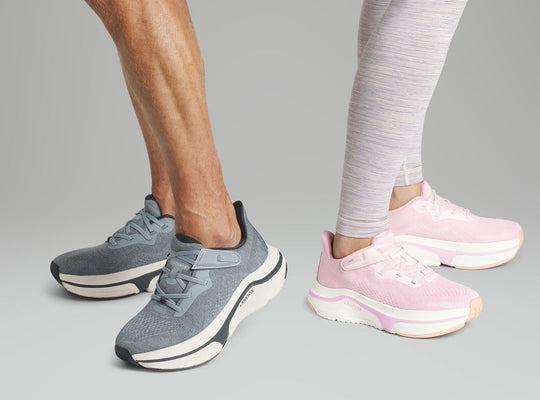
Cadense adaptive shoes combine these features, helping people with drop foot walk more confidently while complementing therapy exercises.
- Start slow – perform each exercise gently to avoid strain.
- Consistency matters – daily practice can yield the best results over time.
- Use support if needed – hold a chair or wall for balance during standing exercises.
- Combine with footwear – wearing supportive shoes during exercises and daily activities enhances stability.
- Consult your therapist – always tailor exercises to your individual needs and conditions.
By pairing exercises with proper footwear, people with drop foot can improve walking efficiency, maintain independence, and help prevent accidents, trips, slips & falls.
Cadense adaptive shoes are designed to support people with drop foot, providing comfort, stability, and independence while helping prevent accidents, trips, slips & falls. Explore the Cadense collection to find shoes that support safer, more confident walking today.
Shop Cadense Shoes →




![[color: black] Original Men's Adaptive Shoe](http://cadense.com/cdn/shop/files/Carousel_1.1_8d540b1a-8d50-4d65-a154-073d92a92343.jpg?crop=center&height=300&v=1782831569&width=300)
![[color: white] Original Women's Adaptive Shoe](http://cadense.com/cdn/shop/files/Carousel_1.1.jpg?crop=center&height=300&v=1782793357&width=300)


