Skip to content
Find A Cadense Coach Location

What Bilateral Foot Drop Means and How It Affects Walking

Posted by:

Johannes Sauer

Updated at: January 09, 2026

Table of Contents
  1. What Bilateral Foot Drop Means and How It Affects Walking

  2. What Causes Bilateral Foot Drop?

  3. How Does Bilateral Foot Drop Affect Daily Mobility?

  4. How Can Therapy and Bracing Help?

  5. How Does Adaptive Footwear Support Walking With Bilateral Foot Drop?

  6. What Steps Can You Take at Home?

  7. Move with Confidence Now

What Bilateral Foot Drop Means and How It Affects Walking

Bilateral foot drop occurs when both feet have difficulty lifting the front portion of the foot during walking. Unlike typical foot drop, which affects one foot, bilateral cases make daily walking more challenging and increase the risk of trips, slips, and falls.

People with bilateral foot drop may notice:

  • Dragging toes on one or both feet
  • Difficulty climbing stairs or walking on uneven surfaces
  • Fatigue from compensatory movements
  • Reduced confidence in walking independently

Recognizing the condition early is important to prevent accidents and maintain mobility.

What Causes Bilateral Foot Drop?

Bilateral foot drop can arise from nerve, muscle, or neurological conditions that affect both legs simultaneously. Common causes include:

  • Neurological disorders: Multiple sclerosis, Charcot-Marie-Tooth disease, or spinal cord injuries
  • Peripheral nerve damage: Compression or injury to both peroneal nerves
  • Muscle weakness or disorders: Conditions that impair ankle dorsiflexion
  • Metabolic or systemic conditions: Diabetes-related neuropathy affecting both feet

Understanding the cause helps guide treatment and management strategies to improve walking safety.

How Does Bilateral Foot Drop Affect Daily Mobility?

Walking with bilateral foot drop requires extra effort and adaptation, which can strain muscles and joints. Challenges may include:

  • Toe dragging leading to trips or stumbles
  • High-stepping gait that causes fatigue in legs, hips, and lower back
  • Difficulty navigating stairs, ramps, or uneven surfaces
  • Reduced balance and stability on long walks

Because both feet are affected, daily activities like shopping, commuting, or even moving around the house can become more difficult.

What Bilateral Foot Drop Means and How It Affects Walking - Cadense shoes for foot drop

Jan 9, 2026

How Can Therapy and Bracing Help?

Although recovery depends on the underlying cause, physical therapy and bracing are essential tools for safer walking with bilateral foot drop.

Physical therapy exercises:

  • Toe raises and dorsiflexion drills to strengthen lifting muscles
  • Gait training to improve coordination and balance
  • Resistance exercises for ankle and lower leg stability

Bracing:

  • Ankle-foot orthoses (AFOs) hold the foot in a lifted position
  • Reduce the risk of trips and support safer steps
  • Can be used temporarily or long-term, depending on needs

Consistent therapy and proper bracing help improve confidence and mobility, even when both feet are affected.

How Does Adaptive Footwear Support Walking With Bilateral Foot Drop?

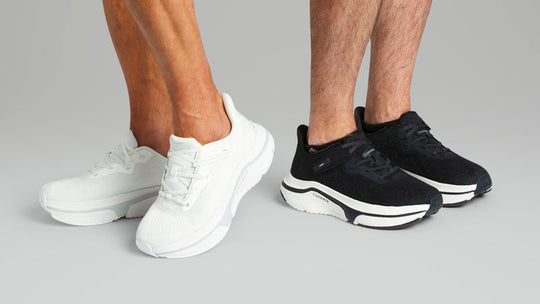
Shoes designed for mobility challenges complement therapy and bracing by providing stability and comfort. Cadense adaptive shoes are built to work alongside an AFO or independently, offering:

  • Wide toe box for balance and comfort
  • Lightweight, flexible soles to encourage natural movement
  • Supportive fit to reduce fatigue
  • Easy on/off design for daily independence

The right footwear helps reduce trips, slips, and falls, making everyday walking safer.

What Steps Can You Take at Home?

To support walking with bilateral foot drop:

  • Follow physical therapy exercises consistently
  • Wear braces or AFOs as recommended
  • Use adaptive footwear for additional support
  • Keep walking areas clear of obstacles
  • Monitor for changes in strength, balance, or foot sensation

These habits reinforce safety and mobility while supporting recovery or ongoing management

Move with Confidence Now

Bilateral foot drop can make walking challenging, but understanding the condition and combining therapy, bracing, and adaptive footwear helps improve safety and confidence.

Explore Cadense adaptive shoes to support your daily walking and help reduce trips, slips, and falls.

Discover Cadense Shoes for Foot Drop


Color:

Only 9 in stock


Color:

11 in stock


Color:

16 in stock

Posted by: Johannes Sauer

Johannes is the CEO and Co-Founder of Cadense and passionate about helping people with walking difficulties. He was immediately drawn to the mission of the company because his cousin lost his lower leg in a tragic motorcycle accident a few years ago and is experiencing walking difficulties ever since. Johannes brings over a decade of experience in working for consumer product companies to Cadense. He holds an MBA from the University of Graz in Austria. Johannes lives with his family in Santa Barbara, CA.

Read more
Older Post
Newer Post

Leave a comment

Please note, comments must be approved before they are published

Shopping Cart