As parents get older, staying active becomes more important—but also more complicated. Balance changes, joint discomfort, and reduced confidence can make even simple walking feel risky.
That’s where structured walking challenges for seniors can help. When designed properly, they provide a safe, gradual way to build strength, improve balance, and restore confidence without overwhelming the body.
For seniors with balance or mobility issues, the key isn’t pushing harder—it’s moving smarter and more consistently.
Even with mobility challenges, walking remains one of the most effective ways to maintain overall health.
It supports:
- muscle strength
- joint flexibility
- circulation
- coordination
- balance
The challenge is making sure walking stays safe and manageable. That’s why structured walking challenges are so useful—they provide direction without adding unnecessary risk.
Not all walking routines are appropriate for seniors with balance issues. A safe walking challenge focuses on control, stability, and gradual progression.
Key elements include:
- short, manageable sessions
- predictable walking paths
- stable surfaces
- supportive footwear
- built-in rest periods
The goal is to create a routine that feels achievable and repeatable.
Here are a few safe and practical walking challenges that can be done at home or in a controlled environment.
1. The 5-Minute Consistency Challenge
Start with just five minutes of walking per session.
- walk at a comfortable pace
- repeat once or twice daily
- focus on steady, controlled steps
After a week, gradually increase to 7–10 minutes.
This builds confidence without overwhelming the body.
2. Room-to-Room Walking Challenge
Use the home layout as a walking path.
- walk from one room to another repeatedly
- use familiar spaces for comfort
- keep pathways clear and well-lit
This is especially helpful for seniors who feel safer indoors.
3. Timed Interval Walking
Alternate between walking and rest periods.
- walk for 2–3 minutes
- rest for 1 minute
- repeat for 10–15 minutes total
This helps manage fatigue while still encouraging movement.
4. Step Count Goals
Set a simple daily step target based on current ability.
- track steps using a phone or wearable
- gradually increase over time
- celebrate small improvements
This adds motivation without pressure.
5. Supported Walking Challenge
For seniors with a higher fall risk, use support during walking.
- walk near a wall or railing
- use a walker or cane if needed
- keep a chair nearby for rest
Safety should always come first.
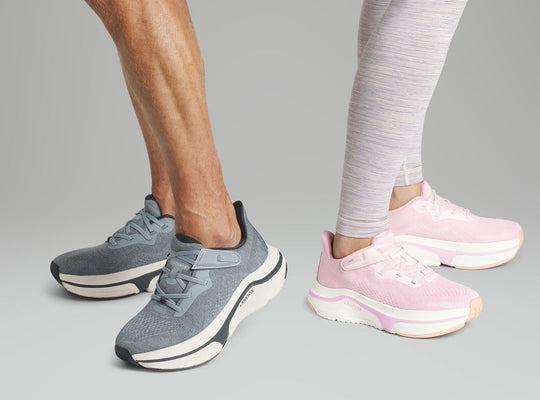
Footwear is one of the most important factors in making walking safer.
The right shoes help:
- improve traction on different surfaces
- stabilize the foot during movement
- reduce fatigue
- support proper alignment
Look for shoes with:
- slip-resistant soles
- secure closures
- cushioning with structure
- a stable base
Avoid loose slippers or worn-out shoes, especially on smooth indoor floors.
Even the best walking plan can be risky if the environment isn’t safe.
Make simple adjustments such as:
- removing loose rugs
- clearing clutter
- improving lighting
- securing cords and obstacles
- adding non-slip mats where needed
A predictable environment allows seniors to focus on movement instead of hazards.
Consistency is what makes walking challenges effective.
But motivation can vary, especially if your parents feel tired or uncertain.
Helpful ways to encourage consistency include:
- setting realistic expectations
- celebrating small wins
- walking with them when possible
- adjusting the routine based on how they feel
The goal is to create a habit, not a burden.
Pay attention to how your parents respond.
You may need to modify the routine if you notice:
- increased fatigue
- discomfort or pain
- hesitation or instability
- reduced interest
It’s better to scale back and maintain consistency than push too far and stop altogether.
When done safely, walking challenges help reduce fall risk by improving:
- muscle strength
- balance and coordination
- confidence in movement
- reaction time
Over time, these improvements make everyday walking feel more stable and controlled.
Staying active is one of the most important factors in maintaining independence.
Walking challenges help seniors:
- stay mobile
- maintain daily routines
- reduce reliance on others
- feel more confident in their movement
For adult children, this is a simple but powerful way to support long-term safety.
Walking challenges for seniors with balance or mobility issues don’t need to be complicated to be effective. With a safe setup, supportive footwear, and a simple routine, your parents can build strength, improve stability, and regain confidence in their daily movement.
For families focused on prevention, combining consistent walking with the right shoes is one of the most practical ways to reduce fall risk and support independence.
Explore Cadense footwear at cadense.com to find shoes designed for stability, comfort, and safer walking—helping your parents stay active, confident, and independent every day.



![[color: all black] Adaptive AFO Shoe](http://cadense.com/cdn/shop/files/AFO_ALL_BLACK_01.jpg?crop=center&height=300&v=1771260700&width=300)
![[color: black] AERIO Men's Sandal-Slide Hybrid](http://cadense.com/cdn/shop/files/AERIO_BLACK_T1_17bf8e85-e048-43b3-acba-51e96397c13b.jpg?crop=center&height=300&v=1762451737&width=300)
![[color: white] AERIO Women's Sandal-Slide Hybrid](http://cadense.com/cdn/shop/files/AERIO_WHITE_T1.jpg?crop=center&height=300&v=1762451738&width=300)
![[color: black] Original Men's Adaptive Shoe](http://cadense.com/cdn/shop/files/Carousel_1.1_8d540b1a-8d50-4d65-a154-073d92a92343.jpg?crop=center&height=300&v=1782831569&width=300)
![[color: white] Original Women's Adaptive Shoe](http://cadense.com/cdn/shop/files/Carousel_1.1.jpg?crop=center&height=300&v=1782793357&width=300)