Foot drop can make lifting the front of your foot difficult, increasing the risk of trips, slips, and falls. An ankle-foot orthosis (AFO) provides support, helps lift the foot, and improves walking safety. Choosing between a flexible or rigid AFO can affect comfort, mobility, and overall independence in daily life.
The right AFO supports natural movement while keeping walking safe and manageable.
A flexible AFO is designed to support the foot while allowing more natural ankle movement. Benefits include:
- Encourages natural gait by permitting slight ankle motion
- Reduces fatigue during longer walks
- Supports daily activities without overly restricting movement
- Works with adaptive footwear for better stability and comfort
Flexible AFOs are often recommended for people who want mobility without sacrificing support.
Rigid AFOs hold the foot in a fixed position to maximize stability. They are often used when strong support is needed due to severe weakness, a high risk of tripping or slipping, or when recovery requires limiting ankle motion temporarily. While they provide maximum stability, rigid AFOs can feel restrictive and may limit natural walking mechanics.
Flexible AFOs allow slight ankle motion, which can make walking feel more natural, reduce leg fatigue, and work well with adaptive shoes. They provide moderate support, helping to prevent trips, slips, and falls while maintaining comfort during daily activities.
Rigid AFOs, on the other hand, fully restrict ankle movement to maximize stability. They are ideal when safety is the top priority, such as in severe weakness or higher fall risk, but may feel restrictive and can increase fatigue during long walks. Choosing the right type depends on balancing mobility, comfort, and stability needs.
Braces are most effective when paired with therapy and supportive shoes:
- Physical therapy strengthens ankle and leg muscles and improves gait
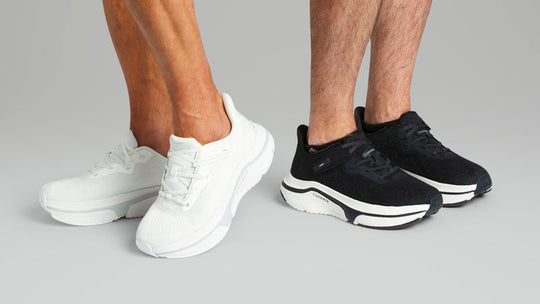
- Adaptive footwear, like Cadense shoes, provides a wide toe box, flexible soles, and a supportive fit
- Consistent use reinforces safe walking habits and reduces trips, slips, and falls
Combining the right AFO with therapy and adaptive shoes ensures safer, more comfortable movement.
- Practice walking with the AFO under professional guidance
- Pair with supportive footwear for stability and comfort
- Monitor fit daily to avoid pressure points
- Adjust use according to activity and fatigue levels
Following these tips helps maintain safe and independent mobility throughout the day.
Choosing between a flexible and rigid AFO depends on your mobility needs, comfort, and risk of trips, slips, and falls. When paired with adaptive footwear and therapy, either option can support safer walking and daily independence.
Explore Cadense adaptive shoes to complement your AFO and improve daily mobility at cadense.com.



![[color: black] Original Men's Adaptive Shoe](http://cadense.com/cdn/shop/files/Carousel_1.1_8d540b1a-8d50-4d65-a154-073d92a92343.jpg?crop=center&height=300&v=1782831569&width=300)
![[color: white] Original Women's Adaptive Shoe](http://cadense.com/cdn/shop/files/Carousel_1.1.jpg?crop=center&height=300&v=1782793357&width=300)
![[color: black] AERIO Men's Sandal-Slide Hybrid](http://cadense.com/cdn/shop/files/AERIO_BLACK_T1_17bf8e85-e048-43b3-acba-51e96397c13b.jpg?crop=center&height=300&v=1762451737&width=300)