Skip to content
Find A Cadense Coach Location

Early Signs of Foot Drop You Shouldn’t Ignore if Walking Feels Unsteady

Posted by:

Johannes Sauer

Updated at: December 05, 2025

Table of Contents
  1. Early Signs of Foot Drop You Shouldn’t Ignore if Walking Feels Unsteady

  2. What Are the Most Common Early Signs of Foot Drop?

  3. Why Do Early Signs of Foot Drop Make Walking Feel Unsteady?

  4. What Conditions Can Cause Early Foot Drop Symptoms?

  5. How Can Supportive Footwear Help When Early Foot Drop Signs Appear?

  6. How Do Cadense Adaptive Shoes Support People Noticing Early Foot Drop?

  7. What Should You Do If You’re Noticing Early Foot Drop Symptoms?

  8. Explore Cadense Adaptive Shoes for Supportive Walking

Early Signs of Foot Drop You Shouldn’t Ignore if Walking Feels Unsteady

If lifting the front of your foot has started to feel harder than usual, you’re not imagining it. Many people notice subtle changes before foot drop becomes obvious, and those early signs can make walking feel less steady. You might catch your toes on a rug more often, feel tired after short distances, or start taking slower, more cautious steps.

These small changes can affect balance over time, and recognizing them early can help you stay safe and mobile.

What Are the Most Common Early Signs of Foot Drop?

Foot drop happens when the muscles responsible for lifting the front of the foot weaken or the nerves controlling them become irritated. Early signs often appear gradually, and it’s easy to mistake them for general fatigue or aging.

Common early symptoms include:

  • A feeling that the toes “catch” the ground while walking
  • Difficulty lifting the front of the foot during a step
  • Slapping sounds when the foot meets the ground
  • Walking that feels heavier, slower, or less coordinated
  • Mild toe drag on carpets or uneven surfaces
  • Unsteadiness when stepping over thresholds or curbs
  • Tiring more quickly on stairs or longer walks

These signs don’t always mean foot drop is fully developed, but they can indicate that the muscles involved in lifting the foot are under strain.

Why Do Early Signs of Foot Drop Make Walking Feel Unsteady?

When the front of the foot doesn’t lift fully, the body tries to compensate. Over time, these changes create extra stress on the legs and core, and walking becomes less smooth and more effortful.

You may notice:

  • Higher steps to avoid toe drag
  • Shorter stride length
  • More pressure on the hips or lower back
  • A greater chance of trips, slips, or accidental missteps

This is why footwear and stability become so important. When the foot doesn’t clear the ground easily, any uneven surface — even a rug edge — can become a challenge.

Early Signs of Foot Drop You Shouldn’t Ignore if Walking Feels Unsteady - Cadense Adaptive Shoes for Foot Drop & Foot Drop Symptoms

Dec 5, 2025

What Conditions Can Cause Early Foot Drop Symptoms?

Foot drop is often related to nerve or muscle changes. Some of the most common underlying causes include:

  • Compressed nerves in the lower leg or lower back
  • Neuropathy, including diabetic neuropathy
  • Muscle weakness after injury, illness, or periods of reduced activity
  • Neurological conditions, such as MS or stroke
  • Tendon or joint stiffness affecting ankle movement

If these early signs appear suddenly or get worse quickly, it’s helpful to talk with a medical provider or physical therapist for an evaluation.

How Can Supportive Footwear Help When Early Foot Drop Signs Appear?

While footwear can’t cure foot drop, the right design can support safer, more stable walking as symptoms begin to show. When the toes drag or the foot feels unsteady, certain shoe features make a meaningful difference in daily comfort.

Supportive footwear can help by offering:

  • A wide toe box to allow natural toe spread for stability
  • Lightweight, flexible soles that support easier foot lifting and smooth movement
  • A secure, supportive fit that keeps the foot steady without restricting mobility
  • Adaptive outsoles that help maintain traction on different surfaces
  • Easy on/off design for people with reduced ankle movement or fatigue

These features help the foot clear the ground more comfortably and reduce the effort needed with each step.

How Do Cadense Adaptive Shoes Support People Noticing Early Foot Drop?

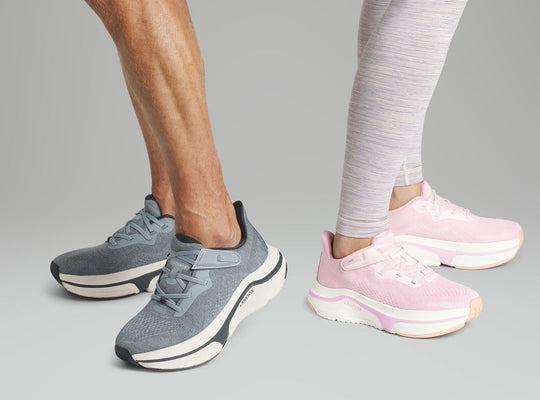
Cadense adaptive shoes are designed for people experiencing mobility challenges, including those showing the early signs of foot drop. Instead of small add-ons or cosmetic changes, Cadense focuses on real functional support that helps walking feel more natural and steady.

Cadense shoes include:

  • A wide toe box to prevent compression and improve balance
  • Lightweight, flexible soles that help support natural motion
  • Patented Variable Friction Technology designed to help maintain traction
  • Supportive cushioning that helps reduce pressure points
  • Easy on/off construction to limit strain on the ankle and lower leg

These features work together to support daily walking so you can move with more confidence and comfort.

What Should You Do If You’re Noticing Early Foot Drop Symptoms?

If walking has started to feel different, catching foot drop early can help you stay active and independent.

You may benefit from:

  • Talking with your doctor or physical therapist
  • Practicing gentle ankle mobility exercises
  • Choosing footwear designed for stability and natural movement
  • Paying attention to how often your toes catch or drag when walking

Small adjustments can make a meaningful difference in mobility and safety over time.

Explore Cadense Adaptive Shoes for Supportive Walking

If you’re starting to notice early signs of foot drop, supportive footwear can help you stay confident and steady on your feet. Cadense adaptive shoes are designed for real mobility needs — with wide toe boxes, flexible soles, and supportive construction that helps with each step.

Shop Cadense Adaptive Shoes Now.

Best Shoes for Foot Drop


Color:

13 in stock


Color:

25 in stock


Color:

68 in stock

Posted by: Johannes Sauer

Johannes is the CEO and Co-Founder of Cadense and passionate about helping people with walking difficulties. He was immediately drawn to the mission of the company because his cousin lost his lower leg in a tragic motorcycle accident a few years ago and is experiencing walking difficulties ever since. Johannes brings over a decade of experience in working for consumer product companies to Cadense. He holds an MBA from the University of Graz in Austria. Johannes lives with his family in Santa Barbara, CA.

Read more
Older Post
Newer Post

Leave a comment

Please note, comments must be approved before they are published

Shopping Cart